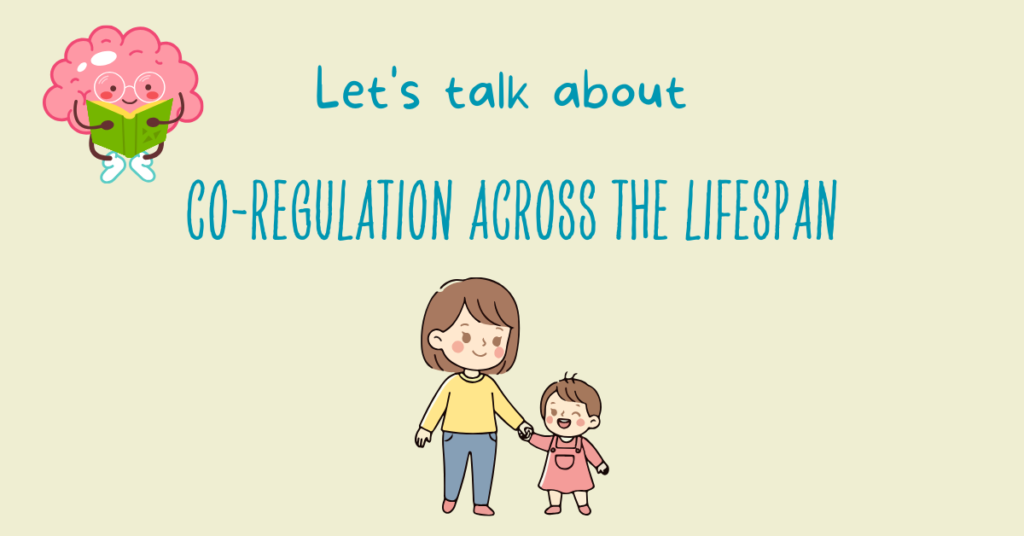
Co‑regulation is a foundational relational process — but it isn’t just something that happens between a parent and a baby. One message that stands out in therapeutic work is this: co‑regulation happens in relationship, and it can ripple across the lifespan — from infants to adults, including people with 22q‑related conditions.
In this blog we explore:
- What co‑regulation is and why it matters
- How the “co‑regulation triangle” can support families
- Ways to embed co‑regulation into everyday life
What Is Co‑Regulation?
Co‑regulation is when one person’s calm and presence helps another regulate emotion and nervous system arousal. Babies, children, teens, and adults alike learn regulation through supportive connection — not just through strategies or techniques.
But that goes both ways — sometimes parents need support too, so they can stay present with their child.
For families living with 22q conditions, co‑regulation becomes especially important because:
- Many individuals have intense sensory or emotional experiences
- Early preverbal stress can shape nervous system responses later in life
- Parents often carry a heavy emotional load while trying to support their child
The “Co-regulation Triangle”: Therapist → Parent → Child
In therapeutic practice, a helpful model is the three‑layer co‑regulation triangle:
1. Therapist supports the parent
2. Parent supports the child
This triangle creates a foundation for genuine regulation to unfold — instead of placing all the responsibility on the parent or the child alone.
What This Looks Like in Practice
Sometimes co‑regulation is gentle and embodied:
- A steady hand on a parent’s back or shoulder
- A grounded, supportive posture beside someone
- Inviting awareness of breath together
These are not techniques to “make everything calm”, but ways to help someone stay present — whether the moment feels uncomfortable, tender, or overwhelming.
A Small Example
Imagine:
- A baby crying intensely in session
- A parent’s breath becoming shallow
- A strong urge to fix or escape the discomfort
Before jumping to advice, the therapist might:
- Sit slightly closer
- Place a steady hand on the parent’s back
- Invite one or two slow, conscious breaths together
The goal isn’t to stop the crying — it’s to help the parent stay with it, grounded and regulated. As the parent settles a little, they can think: “I can be here. I don’t have to escape this.” In turn, the baby feels a more regulated and available caregiver.
Why Co-regulation Matters for the 22q Community
For many people with 22q syndromes:
- Medical and hospital experiences start long before language develops
- Preverbal stress becomes imprinted in the nervous system
- Regulation challenges can show up across childhood, adolescence, and adulthood
These lived experiences mean that co‑regulation isn’t only helpful in infancy — it remains relevant throughout life.
Sometimes, before deeper healing or emotional growth can happen, we first need a stable co‑regulation triangle — a therapist supporting a parent, who then supports a child.
This kind of support builds safety, presence, and connection — crucial ingredients for developing emotional regulation over time.
Co‑Regulation Is Embodied — Not Just Cognitive
Many clinicians receive training primarily in words and cognitive approaches. But embodied presence can be profoundly healing. Co‑regulation isn’t just something we talk about — it’s something we ‘do together’, through:
- Breath
- Touch (with consent)
- Attuned presence
- Shared regulation
These grounded experiences can ripple through relationships and across generations.
Practical Tips for Everyday Co‑Regulation
Here are compassionate, practical ways to weave co‑regulation into family life:
For Parents and Caregivers
- Attend to your own nervous system first — your regulation supports your child’s.
- Use breathing together as a shared regulation tool.
- Notice your body: is it grounded or tense?
- Invite gentle touch (with consent) to convey safety.
For Therapists and Supporters
- Offer your regulated presence before offering instruction.
- Be aware of how your calm can support the parent’s nervous system.
- Create space for parents to show up with whatever they’re feeling — without judgement.
For Families
- Recognise co‑regulation isn’t a one‑time fix — it’s a way of showing up.
- Honour both comfort and discomfort as valid parts of connection.
In Summary
Co‑regulation is a relational dance — one that doesn’t end in infancy, but continues throughout life.
For families affected by 22q conditions, creating supportive, embodied co‑regulation can help:
- Parents feel steadied
- Children feel seen and soothed
- Relationships grow stronger
And it reminds us all: no one has to regulate alone.
Want More Support?
At 22qMinded, we’re here to walk alongside families with practical, compassionate, neuroaffirming strategies. If you or your child is finding it difficult to manage emotional regulation, consider seeking support from a local psychologist, counsellor, or social worker who understands trauma-informed and family-centred approaches. You don’t have to navigate this alone — having someone to support you can make a meaningful difference.
👉 Visit our blog and resources at 22qMinded.com to explore more insights and tools for emotional wellbeing. You can also learn more about our Care4Parents program, designed specifically to support caregivers of individuals with 22q-related conditions. This program offers space for connection, education, and emotional support — so parents can feel more resourced, understood, and empowered in their caregiving journey.
Recommended Read
“Parenting from the Inside Out” by Daniel J. Siegel & Mary Hartzell. This insightful book helps parents understand their own emotional experiences and inner world so they can more effectively support co‑regulation with their child. It’s a compassionate, science-informed guide for anyone looking to build stronger, more connected family relationships.